 +7 (988) 379-41-22






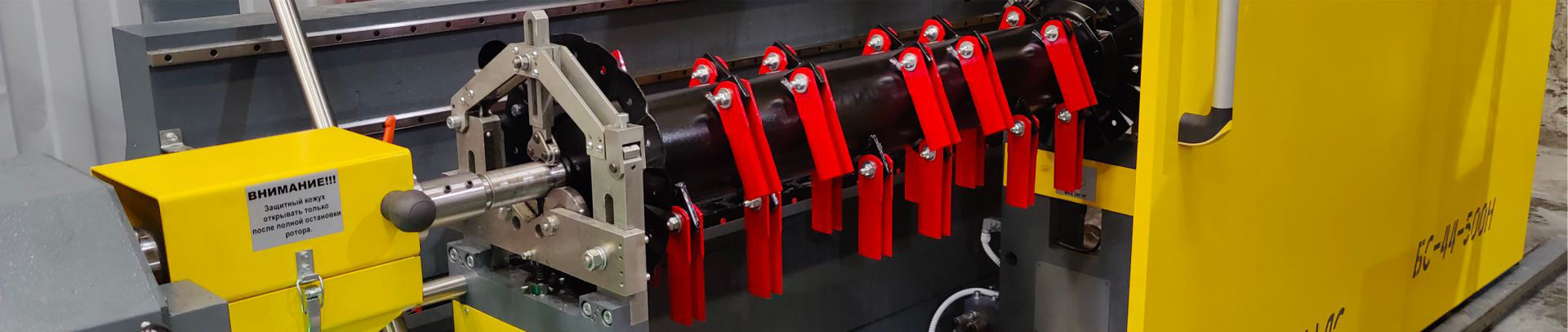
A rotor balancing machine is...
What is a Rotor Balancing Machine?
Definition and Application
A rotor balancing machine is specialized equipment designed to eliminate imbalance in rotating parts (rotors) by identifying and correcting uneven mass distribution.
Such machines are widely used in industry, mechanical engineering, aviation, power generation, and other fields that require high precision in the rotation of mechanisms, such as turbines, electric motors, crankshafts, fans, and pumps.
Operating Principle
The balancing machine secures the rotor and rotates it at a specific speed. Using sensors (typically vibration or strain gauge sensors), the machine registers vibrations caused by imbalance. Imbalance occurs when the rotor's center of mass does not coincide with its geometric axis of rotation. Based on the data obtained, the machine's measurement system calculates the magnitude and angular position of the unbalanced mass.
Then, the operator or an automated system corrects the imbalance by adding a corrective mass (e.g., by welding balance weights) or by removing excess mass (e.g., by drilling or milling).
Main Components
- Support Frame or Bed: Provides stability and dampens vibrations.
- Drive: An electric motor or other mechanism that rotates the rotor.
- Supports or Bearings: Secure the rotor and allow it to rotate freely.
- Vibration Sensors: Measure the amplitude and phase of oscillations.
- Measurement and Control System: Processes the data and outputs the results in the form of graphs, numbers, or recommendations.
- Software (in modern models): Automates the analysis and simplifies the balancing process.
Types of Balancing Machines
- Static: Used to detect imbalance in a single plane, suitable for simple rotors (e.g., discs).
- Dynamic: Used for complex rotors with distributed mass, analyzing imbalance in multiple planes.
- Universal: Suitable for different types of rotors and feature adjustable settings.
- Specialized: Designed for specific components, such as turbines or automotive wheels.
Advantages of Use
- Reduced vibration and noise in mechanisms.
- Extended service life of bearings and other components.
- Improved energy efficiency and equipment safety.
Application
Balancing machines are indispensable in the manufacturing and repair of rotating mechanisms. For example, in the automotive industry, they are used for balancing wheels and crankshafts; in aviation, for engine turbines; and in household appliances, for washing machine rotors.
Thus, a rotor balancing machine is a high-tech device that ensures the precision, reliability, and longevity
of rotating systems by eliminating mass imbalance.